Choosing the right Signal Generator supplier in 2026 requires more than comparing catalog prices. Global buyers need dependable frequency coverage, clean phase noise, stable output power, and flexible analog or digital modulation. A unit may look impressive on paper, yet perform poorly beside a spectrum analyzer. That difference matters.
I have seen engineers test portable generators in crowded laboratories, where cable loss, connector wear, and temperature drift quietly changed the results. Practical experience should guide supplier evaluation. Look for traceable calibration, clear uncertainty data, responsive technical support, and service centers near your operating region. Warranty terms matter too. So does software compatibility. A powerful instrument becomes frustrating when its drivers are outdated.
Bob Witte, a recognized RF measurement author and engineer, offers a useful reminder: “A measurement is only as good as the measurement setup.” His point applies directly to supplier selection. Buyers should examine complete test conditions, not isolated specifications. Ask about phase-noise plots, switching speed, reference stability, modulation accuracy, and long-term maintenance. Request realistic demonstrations with your intended application.
No ranking is perfect. Some suppliers excel in advanced aerospace testing, while others serve education, production lines, or field maintenance better. Regional certification, delivery reliability, and local training can also change the final decision. The cheapest Signal Generator may create higher costs later. That is an uncomfortable possibility, but a necessary one to consider. This guide compares leading suppliers through performance, support, credibility, and total ownership value for international buyers.
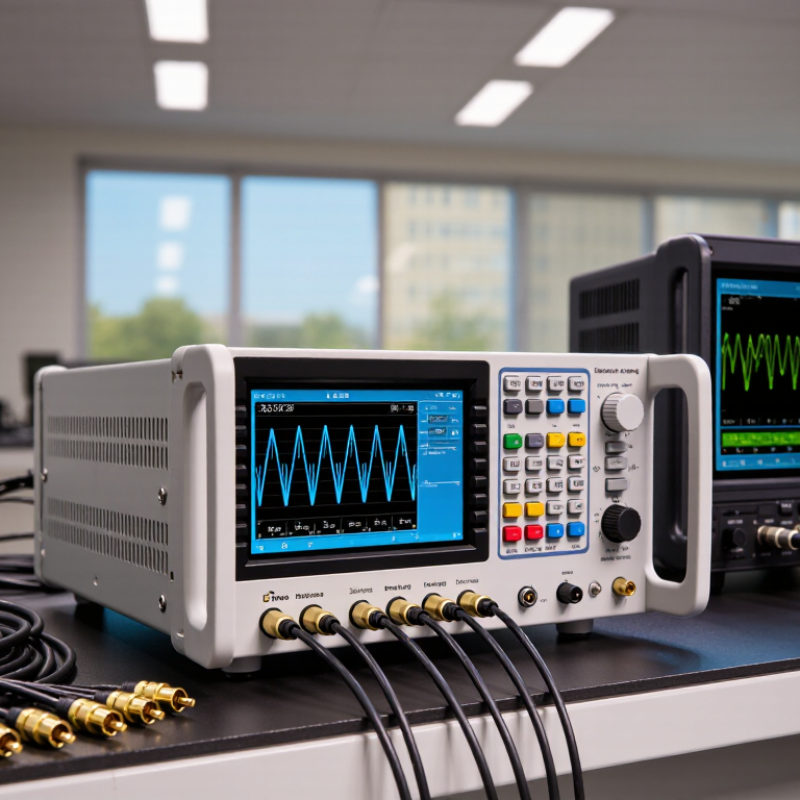
Signal generators create controlled electrical signals for testing receivers, amplifiers, sensors, and communication systems. They can produce sine waves, pulses, sweeps, and digitally modulated signals. A technician may set frequency, power, bandwidth, and modulation on a front-panel display. The instrument then imitates a real transmitter or interference source under controlled conditions.
Vector models add complex I/Q waveforms for modern wireless testing. This matters as networks move toward wider bandwidths and higher frequencies. The International Telecommunication Union’s IMT-2030 Framework identifies demanding requirements for future wireless performance and measurement accuracy.
The June 2024 Mobility Report forecast 5G subscriptions could reach 5.6 billion globally by 2029. That expansion increases pressure on laboratories to verify devices across many bands and signal conditions. The WSTS Spring 2025 forecast placed worldwide semiconductor sales near 697 billion dollars for 2025. More chips usually mean more validation steps.
In practice, a reliable generator should offer low phase noise, stable output power, fast switching, and clear calibration records. A useful test might involve a small shielded enclosure, a coaxial cable, and a receiver showing a weak signal at a defined frequency. Yet specifications alone can mislead. Real measurements may drift with temperature, cables, connectors, or operator settings. Buyers should question published limits and request traceable calibration evidence. No instrument is perfect. A careful engineer leaves room for uncertainty.
When comparing 2026 signal generator suppliers, specifications should guide the conversation, not attractive catalog language. Start with frequency range, frequency resolution, output power, and phase noise. A wide range is useful, but poor phase stability can weaken sensitive measurements. Check whether the supplier publishes typical and guaranteed values. The difference matters in production testing. Ask for frequency accuracy at defined temperatures, such as 23°C, rather than accepting a vague “high precision” claim. Also examine modulation options, sweep speed, switching time, and available interfaces. These details affect real laboratory workflows.
Tips: Request a complete datasheet and a sample test report. Confirm connector types, impedance, harmonic performance, and spurious output levels. Ask how calibration is performed and whether traceable certificates are available. Do not ignore software support. A generator that integrates poorly with existing instruments can waste hours. Lead time, repair procedures, spare parts, and technical response times deserve written confirmation.
From practical evaluation, supplier reliability often appears in small details. Clear error limits inspire more confidence than impressive adjectives. Test the unit with your own cables and loads when possible. That matters. A specification may look excellent under ideal conditions, yet behave differently in a crowded test rack. I would also compare warranty terms and firmware update policies. These points are easy to overlook. My earlier evaluations focused too heavily on maximum frequency, and that was a mistake. For global buyers, stable documentation, consistent calibration, and responsive engineering support may be more valuable than one impressive headline number.
2026 Best Signal Generator Suppliers for Global Buyers?
The 2026 supplier landscape is becoming more regional and application-driven. Grand View Research estimates the global electronic test and measurement market reached about USD 29 billion in 2023. It projects steady growth through 2030, supported by wireless, automotive, and semiconductor production.
East Asia remains a major manufacturing center for value-focused signal generators. Buyers can often find flexible frequency ranges, compact enclosures, and faster customization there. North American suppliers typically emphasize advanced modulation, automation, and software integration. European manufacturers are strong in precision engineering, calibration stability, and laboratory-grade performance. Southeast Asia is gaining attention for assembly capacity and shorter regional delivery routes.
Regional fit matters.
MarketsandMarkets reports continued expansion in RF test equipment, driven by 5G upgrades, satellite systems, and connected devices. However, published market estimates differ by methodology. Buyers should not treat one forecast as absolute evidence. I would compare phase-noise data, output accuracy, warranty terms, and calibration traceability before reviewing price.
A practical evaluation starts with the production site. Check whether the supplier supports local service centers, replacement parts, and remote diagnostics. Request test records using your intended frequency bands and load conditions. A supplier may quote excellent specifications, yet perform poorly under continuous factory use. That gap deserves attention.
Global buyers need more than a low quote when selecting a signal generator supplier. Quality begins with stable frequency output, low phase noise, accurate amplitude control, and repeatable performance. Ask for recent test reports, calibration records, and product specifications that match your application. A supplier should explain measurement limits clearly, not hide them behind impressive figures.
Compliance also deserves close attention. Check whether the equipment includes relevant safety, electromagnetic compatibility, and environmental documentation for your destination market. ISO/IEC 17025-accredited calibration can strengthen confidence, especially in laboratory or production environments. Pricing should include accessories, calibration, shipping, software, training, and possible import costs. The cheapest offer may become expensive after delivery. I have seen buyers overlook connector options and replacement lead times. That mistake is easy to repeat.
Tips: Request a sample test report before ordering. Compare warranty length and repair procedures. Confirm technical support hours and response targets. Ask whether engineers can review setup files or diagnose faults remotely. A supplier with clear escalation steps is usually more dependable than one offering vague promises. Still, no supplier is perfect. Review failure histories, question unclear claims, and record every technical requirement in writing.
| Supplier Profile | Typical Product Category | Frequency Coverage | Typical Output Performance | Quality and Calibration Evidence | Relevant Compliance Documentation | Indicative Unit Price (USD) | Typical Lead Time | Technical Support Level | Best-Fit Buyer | Overall Assessment |
|---|---|---|---|---|---|---|---|---|---|---|
| Profile A: Premium RF and Microwave Specialist | Laboratory-grade analog and vector signal generators for advanced RF, microwave, satellite, radar, and wireless testing | Up to approximately 20–44 GHz, with higher-frequency configurations available in specialized models | Very low phase noise, high frequency accuracy, fast frequency switching, and advanced digital modulation options | ISO 9001 quality system; traceable factory calibration; calibration reports normally available; optional ISO/IEC 17025-accredited calibration through qualified laboratories | CE, UKCA where applicable, FCC-related requirements for applicable equipment, RoHS, REACH, and country-specific import documentation | $20,000–$100,000+ | 8–20 weeks for standard configurations; longer for customized or high-frequency systems | Expert / Global Application engineers, remote diagnostics, firmware support, and paid on-site services may be available |
Defense, aerospace, semiconductor, telecommunications, and national research laboratories | High-performance choice |
| Profile B: Professional General-Purpose Test Equipment Supplier | Analog and vector signal generators for production testing, RF design, education, and service laboratories | Up to approximately 6–20 GHz | Good frequency stability, reliable modulation functions, broad waveform support, and strong repeatability for routine testing | ISO 9001 quality system; standard factory test report; calibration intervals commonly recommended at 12 months, depending on usage and internal quality procedures | CE, UKCA where applicable, FCC-related requirements for applicable equipment, RoHS, REACH, and standard product safety documentation | $5,000–$30,000 | 4–12 weeks for standard models | Strong Product manuals, software drivers, application notes, email support, and repair services generally available |
Commercial laboratories, OEM production lines, universities, and maintenance departments | Balanced value |
| Profile C: Value-Oriented RF Test Equipment Supplier | Entry-level RF signal generators, compact vector generators, and basic modulation sources | Up to approximately 3–6 GHz; selected models may extend to 12 GHz | Suitable for common RF measurements, training, repair, and low-to-medium complexity production testing | Factory verification or test certificate typically included; buyers should confirm reference standards, uncertainty data, and available calibration services before purchase | CE, RoHS, REACH, and local electrical safety documents may be available; verify the exact model and destination-market requirements | $1,000–$8,000 | 2–8 weeks for stock or standard configurations | Standard Remote product support and basic software assistance; response times and repair coverage should be confirmed contractually |
Technical schools, small laboratories, repair centers, startups, and cost-sensitive buyers | Cost-effective |
| Profile D: Modular PXI or USB-Based Test Platform Supplier | Modular RF signal-generation cards, USB instruments, software-defined test systems, and automated production platforms | Typically DC to 6–20 GHz per module, depending on architecture and installed options | High channel density, synchronized multi-channel operation, software automation, and scalable system integration | Factory calibration and automated self-test are common; system-level validation, synchronization accuracy, and software version control require buyer-side acceptance testing | CE, UKCA where applicable, FCC-related requirements for applicable equipment, RoHS, REACH, and platform-specific safety documentation | $3,000–$50,000 per module or system configuration | 6–16 weeks, depending on chassis, modules, licenses, and integration scope | Integration-focused APIs, drivers, SDKs, programming examples, and engineering support are important evaluation criteria |
Automated test equipment builders, automotive electronics, high-volume manufacturing, and R&D teams | Best for automation |
| Profile E: EMC and Compliance Test Solution Supplier | EMI/EMC test signal sources, disturbance generators, pulse-modulation sources, and compliance-oriented test systems | Commonly audio, low-frequency, RF, and selected microwave bands according to the applicable test standard | Repeatable output levels, defined modulation accuracy, controlled transients, and test-sequence compatibility | Calibration should reference the applicable EMC standard and measurement uncertainty; accredited calibration is preferable for regulated test environments | Documentation may reference IEC, CISPR, EN, ISO, and regional EMC requirements; confirm the exact standard edition supported by the system | $8,000–$80,000+ | 8–24 weeks, particularly for complete test systems and accessories | Application-specific Standards interpretation, test-plan support, installation, training, and periodic verification are key differentiators |
Compliance laboratories, certification bodies, automotive suppliers, medical-device manufacturers, and industrial electronics companies | Best for compliance testing |
| Profile F: Portable and Field-Service Instrument Supplier | Battery-powered RF sources, handheld signal generators, field calibrators, and compact service instruments | Typically up to 3–6 GHz, with selected specialist instruments reaching higher bands | Portable operation, fast setup, moderate frequency accuracy, field-level output control, and ruggedized enclosures | Factory calibration certificate commonly supplied; verify battery aging limits, environmental specifications, connector durability, and recalibration options | CE, UKCA where applicable, RoHS, REACH, battery transport documents, and regional radio-frequency or safety requirements where relevant | $1,500–$15,000 | 2–10 weeks, subject to battery, accessory, and regional stock availability | Practical Distributor support, field-service documentation, firmware updates, and repair turnaround should be checked before order placement |
Telecom field teams, installers, maintenance contractors, utilities, and service organizations | Best for mobility |
| Profile G: Contract Manufacturer and Private-Label Supplier | OEM signal generators, customized enclosures, embedded RF sources, and private-label test instruments | Commonly DC to 3–6 GHz; higher-frequency designs depend on engineering capability and component availability | Performance varies by design; documentation, firmware maturity, long-term drift, and production consistency require formal validation | May operate under ISO 9001 or equivalent quality procedures; buyers should request first-article inspection, production test records, component traceability, and change-control procedures | CE, UKCA, FCC-related requirements, RoHS, REACH, and destination-market safety requirements may be supported as part of the project scope | $500–$10,000 per unit, often subject to minimum order quantities and engineering fees | 8–20 weeks for prototypes; 10–24 weeks for production ramp-up | Project-dependent Technical support depends on the agreed statement of work, documentation package, warranty terms, and spare-parts plan |
Distributors, system integrators, equipment manufacturers, and buyers requiring customized branding or interfaces | Best for customization |
Buyer evaluation guidance: Request a model-specific datasheet, uncertainty budget or calibration information, compliance declarations, warranty terms, software and firmware policy, spare-parts availability, delivery commitment, acceptance-test procedure, and total cost of ownership before issuing a purchase order.
Selecting a signal generator supplier should begin with application evidence, not a polished catalog. Market research estimates place the global signal generator market above USD 1 billion, with continued growth through 2030 (Grand View Research, 2024). That growth attracts capable manufacturers and weak resellers. Define frequency range, phase noise, output power, modulation types, connector standards, and calibration intervals. Ask for a sample configuration and a written quotation. Vague specifications are warning signs.
Verify the supplier in stages. Request traceable calibration records, uncertainty budgets, production test procedures, and ISO/IEC 17025 calibration capability. NIST Technical Note 1297 explains that measurement uncertainty must include relevant error components, not only a single accuracy figure. Ask for test data at your intended frequency and power, then compare it with your acceptance limits. Check serial-number traceability, firmware controls, warranty terms, and spare-part availability. A remote demonstration can reveal unstable output or slow support.
Use a paid sample or pilot order before approving volume purchases. Inspect packaging, connector torque, display readings, and performance after several operating hours. Record every discrepancy. One mistake is trusting a certificate without matching its model and serial number. I have seen verification plans fail because engineers tested only nominal settings. That was careless. Test low, mid, and high ranges, including modulation and temperature changes. Supplier references should come from users with similar duty cycles, not only large laboratories. Pricing still matters, but the cheapest quotation may hide recalibration, shipping, or integration costs.
Check frequency range, frequency resolution, output power, and phase noise. A wide range is not enough. Also review modulation options, sweep speed, switching time, and interfaces.
Accuracy can change with temperature. Ask for results at 23°C or your operating temperature. Avoid vague claims like “high precision.” Defined conditions make supplier comparisons fairer.
Request a complete datasheet, sample test report, and calibration records. Check typical and guaranteed values separately. Clear error limits are more useful than attractive adjectives.
Ask for traceable certificates, uncertainty information, and production test procedures. Match the certificate to the correct model and serial number. That detail is easy to miss.
Use a paid sample or pilot order. Test low, middle, and high frequencies. Include modulation, temperature changes, and several operating hours. Test it yourself.
Cables, connectors, and loads can affect real measurements. A unit may perform well under ideal conditions but struggle in a crowded rack. Record every discrepancy.
Confirm lead time, repair procedures, spare parts, warranty terms, and response times. Review software compatibility and firmware update policies. Poor integration can waste hours.
Ask users with similar duty cycles and laboratory conditions. A large laboratory may not represent your daily workload. I once focused too much on maximum frequency. That was a mistake.
This guide explains how a Signal Generator supports modern testing by producing controlled electrical waveforms for research, design validation, manufacturing, maintenance, and educational applications. It outlines the key specifications buyers should compare, including frequency range, output power, modulation capabilities, signal purity, accuracy, interface options, software compatibility, and long-term stability. Understanding these factors helps global buyers match equipment performance with specific testing requirements while avoiding unnecessary cost.
The article also reviews supplier considerations across major manufacturing regions, focusing on product quality, certification, traceability, pricing transparency, delivery capability, warranty terms, and technical support. A practical selection process is provided: define application needs, create a technical specification, shortlist qualified suppliers, verify documentation and sample performance, compare total ownership costs, assess communication and after-sales service, and conduct a final risk review before placing an order. This structured approach enables buyers to choose dependable solutions and build stronger, more transparent international procurement decisions.
