2026 Best Thermal Imaging Camera for Global Buyers?

Time:2026-09-18 Author:Aria
0%

Choosing the 2026 Best Thermal Imaging Camera requires more than comparing resolution and price. Global buyers face different climates, voltage systems, service networks, and compliance expectations. A camera used in a Singapore electrical room may need high humidity resistance. A model used on Canadian construction sites needs dependable performance in freezing conditions. The “best” choice is rarely universal.

Industry data shows why this category continues to attract attention. Allied Market Research valued the global thermal imaging market at approximately USD 4.7 billion in 2021. Its report projected the market could reach about USD 8.4 billion by 2031, supported by industrial inspection, building diagnostics, healthcare, and security applications. Grand View Research also reported strong market expansion through 2030, driven by lower sensor costs and wider commercial adoption. These figures describe market direction, not guaranteed product quality.

Technical judgment still matters. Resolution, thermal sensitivity, measurement accuracy, lens options, calibration, and software workflow can change the buying decision. A 256 × 192 sensor may be sufficient for routine electrical checks. High-temperature industrial inspections may require broader measurement ranges and better radiometric detail. Standards such as ISO 18434-1 and ASTM E1933 provide useful references for thermal condition monitoring and measurement practice. Yet standards do not replace field experience.

No ranking can be perfect. Manufacturer specifications may look impressive under controlled conditions. Real performance can change with distance, reflective metal, wind, dust, and operator skill. This guide therefore evaluates practical reliability, regional support, data handling, and total ownership cost. The goal is simple: help global buyers select a Thermal Imaging Camera that performs beyond the showroom.
2026 Best Thermal Imaging Camera for Global Buyers?

Thermal Imaging Cameras: Definition, Principles, and Main Uses

Thermal Imaging Cameras: Definition, Principles, and Main Uses

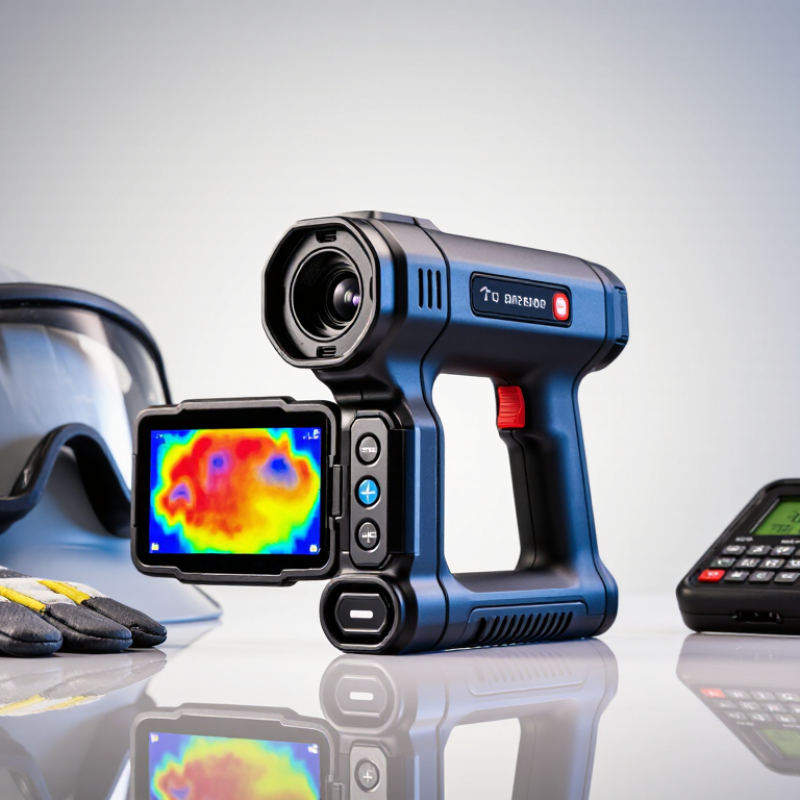
A thermal imaging camera detects infrared energy emitted by objects. It converts temperature differences into colored or grayscale images. Unlike a normal camera, it works in darkness and often reveals heat patterns invisible to the human eye. However, it does not see through walls, glass, or solid metal. It measures surface temperature, not hidden conditions directly.

The camera’s sensor receives infrared radiation and processes it according to emissivity, distance, reflected temperature, and atmospheric conditions. Materials behave differently. Matte rubber usually gives more reliable readings than shiny aluminum. A practical mistake is trusting the brightest color immediately. Reflections, airflow, moisture, or a warm person nearby can distort the image. Building inspectors use thermal cameras to locate insulation gaps and damp areas. Electricians check abnormal heat around connections. Maintenance teams examine bearings, motors, pipes, and control cabinets before failures become expensive. Farmers and researchers may also monitor crop stress, animals, or changing soil conditions.

Tips: Set the correct emissivity. Keep a stable distance. Avoid shooting through windows. Compare similar surfaces under similar conditions. Record the room temperature and image location. Small details matter. A thermal image is evidence, not a final diagnosis, so confirm unusual readings with contact thermometers or qualified inspection methods. I would also review the same area later, because one image can be misleading.

How to Compare Thermal Imaging Camera Performance and Image Quality

2026 Best Thermal Imaging Camera for Global Buyers?

How to Compare Thermal Imaging Camera Performance and Image Quality

A thermal camera should be judged under controlled conditions, not by colorful screen images. Compare cameras on the same target, distance, lens angle, and weather. A hot pipe at 80°C can reveal sensitivity differences quickly. Check thermal sensitivity, often shown as NETD. Lower values can expose smaller temperature changes. This matters when inspecting insulation, electrical connections, or machinery bearings.

Image quality depends on more than resolution. A higher pixel count helps identify small targets, but lens quality and focus remain critical. Test both a wide view and a distant object. Look for sharp edges around a warm cable against a cooler wall. Check whether the image stays clear near the center and corners. Manual focus can improve detail, although it slows inspections. Frame rate also affects moving equipment. Smooth imaging makes temperature changes easier to follow.

Accuracy requires careful handling. Set the correct emissivity for painted surfaces, skin, plastic, or oxidized metal. Shiny metal can reflect nearby heat and produce a misleading reading. I have seen a cool-looking panel appear hot because it reflected sunlight. That mistake is easy to repeat. Verify important readings with a trusted reference method when possible. Test the camera in daylight, darkness, mild rain, and changing temperatures. No model performs perfectly everywhere. Calibration records, software stability, battery life, and readable reports also influence professional value.

2026 Best Thermal Imaging Camera for Global Buyers? - How to Compare Thermal Imaging Camera Performance and Image Quality

Comparison Dimension Basic Inspection Class Professional Handheld Class High-Resolution Professional Class Advanced Cooled Class
Primary Use Home inspection, basic electrical checks, HVAC screening and maintenance training Building inspection, electrical maintenance, mechanical troubleshooting and energy audits Detailed industrial inspection, research support, utilities and predictive maintenance Long-range surveillance, high-speed events, research, defense and specialized scientific measurement
Detector Type Uncooled microbolometer Uncooled microbolometer Uncooled microbolometer with a larger detector array Cooled photon detector, commonly using mid-wave infrared technology
Typical Spectral Range Long-wave infrared, approximately 8–14 μm Long-wave infrared, approximately 7.5–14 μm Long-wave infrared, approximately 7.5–14 μm Typically mid-wave infrared, approximately 3–5 μm; exact range depends on detector material
Typical Infrared Resolution 80 × 60 to 160 × 120 pixels 160 × 120 to 320 × 240 pixels 640 × 480 pixels or higher 320 × 256 to 1280 × 1024 pixels, depending on the scientific or surveillance configuration
Detector Pixel Pitch Approximately 12–17 μm Approximately 12 μm Approximately 12 μm or smaller Commonly 10–15 μm, depending on the cooled detector design
Thermal Sensitivity (NETD) Typically ≤60 mK Typically ≤45 mK Typically ≤35 mK Often ≤25 mK, with performance depending on integration time, optics and operating conditions
Image Detail and Edge Definition Suitable for identifying obvious hot and cold areas; small targets may merge together Good separation of common electrical, mechanical and building targets High spatial detail for small components, narrow temperature gradients and distant targets Excellent sensitivity and detail, particularly for fast, distant or low-contrast targets
Recommended Measurement Distance Short range; generally suitable for nearby components and rooms Short to medium range, subject to lens field of view and target size Short to long range when paired with telephoto or interchangeable optics Medium to very long range when matched with appropriate cooled optics
Standard Temperature Measurement Range Approximately −20°C to 300°C Approximately −20°C to 550°C Approximately −20°C to 650°C; extended ranges may require a dedicated high-temperature mode Often from approximately −20°C to 1,500°C or more, depending on calibration, filters and detector configuration
Typical Measurement Accuracy Approximately ±2°C or ±2% of reading, whichever is greater Approximately ±2°C or ±2% of reading, whichever is greater Approximately ±2°C or ±2% of reading, whichever is greater; verification is required for critical measurements Application-dependent; may reach approximately ±1°C or ±1% under controlled conditions, but requires calibration and correct emissivity settings
Frame Rate 9 Hz or regionally restricted lower frame rate 9–30 Hz, subject to local export and regulatory restrictions 25–60 Hz, subject to local export and regulatory restrictions 30–200 Hz or higher in specialized high-speed configurations
Focus System Fixed focus or simple manual focus Manual focus or assisted autofocus Manual, autofocus or continuous autofocus with interchangeable lens options Motorized or precision manual focus, usually paired with specialized optics
Field of View Wide fixed lens, commonly around 30°–45° horizontal field of view Interchangeable or selectable lenses, commonly around 24°–45° Wide, standard and telephoto options; lens choice strongly affects measurement quality Typically narrow or variable field of view for long-distance and precision observation
Measurement Tools Center spot, hot spot, cold spot and basic temperature scale Multiple spots, areas, lines, alarms, emissivity adjustment and reflected-temperature compensation Advanced radiometric areas, profiles, isotherms, alarms, humidity and distance compensation Radiometric recording, calibrated regions, high-speed analysis and specialized scientific measurement tools
Visible-Light Camera Optional or basic visible-light reference camera Usually included for scene documentation and image alignment High-resolution visible camera, image fusion and picture-in-picture are commonly available Visible-light, low-light or other synchronized channels may be integrated depending on system design
Image Enhancement Features Basic color palettes and automatic temperature scaling Level-and-span adjustment, color alarms, digital zoom and simple image blending Multi-level image blending, high-resolution enhancement, radiometric video and advanced filtering Advanced non-uniformity correction, noise reduction, high-speed processing and scientific image analysis
Radiometric Data May provide single-point or limited radiometric measurements Radiometric still images with exportable temperature data are commonly available Full-frame radiometric images and radiometric video are commonly supported Full-frame calibrated data, high-speed radiometry and specialized data formats are commonly supported
Environmental Protection Often basic splash and dust resistance; verify the stated IP rating Commonly designed for field use with an IP54–IP65 range, depending on the enclosure Often reinforced for industrial field use; some configurations reach IP65 or higher Protection varies widely because cooled systems may require larger housings, external accessories or controlled environments
Battery and Operating Time Approximately 4–8 hours under typical intermittent inspection use Approximately 4–8 hours with replaceable or rechargeable batteries Approximately 3–6 hours depending on display brightness, wireless functions and recording load Approximately 2–6 hours; cooling power, frame rate and recording requirements can significantly affect runtime
Data Connectivity USB or removable storage; wireless functions may be limited USB, Wi-Fi or Bluetooth are commonly available USB-C, Wi-Fi, Bluetooth, removable storage and professional reporting software are commonly available High-speed digital interfaces, network streaming and specialized acquisition systems may be required
Calibration and Maintenance Periodic calibration recommended for reliable temperature measurements Scheduled calibration and lens inspection recommended for professional work Calibration certificates, traceability and regular verification are important for regulated applications Frequent calibration, detector maintenance and controlled operating procedures are normally required
Best Buying Priority Simple operation, sufficient temperature range, low weight and clear warranty terms NETD, focus performance, measurement accuracy, ruggedness and reporting workflow Detector resolution, IFOV, lens selection, radiometric video and software compatibility Detector sensitivity, frame rate, optical performance, calibration capability and system integration
Comparison note: The specifications above represent realistic market ranges for each thermal imaging camera class rather than data from any particular company or brand. Actual performance depends on detector technology, lens selection, calibration procedure, atmospheric conditions, target emissivity, reflected temperature, measurement distance and local regulatory requirements.
Key evaluation rule: Higher infrared resolution does not automatically guarantee better temperature accuracy. For image quality, compare NETD, detector resolution, pixel pitch, instantaneous field of view (IFOV), focus accuracy, lens quality and radiometric data capability together.

Key Features for Global Buyers: Resolution, Sensitivity, and Temperature Range

For global buyers, the best thermal imaging camera is rarely the one with the highest advertised specification. Resolution affects how clearly you see small targets, such as a loose electrical terminal across a plant room. A 640 × 512 sensor can reveal finer details than a 256 × 192 sensor. Yet screen quality and focus still matter. From field inspections, I have found that poor focus can erase useful detail faster than modest resolution. That is easy to overlook.

Sensitivity, often listed as NETD, shows the camera’s ability to detect small temperature differences. Lower values are generally better for insulation gaps, moisture patterns, or early overheating. Do not judge sensitivity in isolation. Wind, reflective metal, distance, and calibration can distort readings. Temperature range must match the work, not simply look impressive on a product sheet. Furnace inspection needs a higher limit than routine building checks. Wide range is useful, but accuracy at the actual working point matters more. This distinction is sometimes missed.

Tips: Ask for calibration records, emissivity controls, and regional service support. Test sample surfaces before purchase. Compare readings from a hot pipe and a cool wall with a trusted contact thermometer. Some cameras perform differently after transport, so verify them on arrival. I still consider this step essential.

2026 Best Thermal Imaging Camera for Global Buyers

Key Features for Global Buyers: Resolution, Sensitivity, and Temperature Range

Representative specification bands for common thermal camera classes. Higher resolution improves image detail, lower NETD indicates better sensitivity, and a wider temperature range supports more demanding industrial, electrical, building inspection, and research applications.

Regional Standards, Compliance, and Import Considerations in 2026

In 2026, the best thermal imaging camera depends on regional standards, not only image resolution. Buyers should check electrical safety, electromagnetic compatibility, and measurement accuracy requirements. These rules can differ between North America, the European Union, and Asia-Pacific markets. During purchasing checks, I compare the camera’s test reports with the destination country’s current requirements.

Small details matter. Confirm voltage, plug type, charging design, and operating temperature before shipment. An imported camera may need a local conformity mark or an authorized safety document. Wireless models can require additional radio approvals. Request the user manual, declaration of conformity, calibration certificate, and factory test report. Do not rely on a product page alone. Documents must match the exact model and accessories.

For customs clearance, prepare accurate invoices, packing lists, product descriptions, and tariff classifications. Ask the customs broker to verify duties before payment. Import duties vary. One overlooked issue is the declared measurement function. A camera designed for industrial inspection may face different requirements from a consumer device. Data handling also deserves attention when images contain workplaces or private areas. Some buyers focus on thermal sensitivity and forget local privacy expectations. I have seen shipments delayed because serial numbers differed across documents. That gap is avoidable, but it happens. Standards change. Before payment, confirm the latest rules with local authorities, a qualified importer, or an independent compliance specialist.

Selecting the Best Thermal Imaging Camera for Different Applications

Selecting the best thermal imaging camera depends on the application, not the highest specification. MarketsandMarkets estimates that the thermal imaging market may grow from about USD 4.6 billion in 2023 to USD 7.0 billion by 2028. This growth reflects wider use in electrical inspection, predictive maintenance, building diagnostics, and public safety.

For electrical panels, choose a camera with suitable temperature ranges, strong thermal sensitivity, and reliable emissivity settings. Maintenance teams may need radiometric images, interchangeable lenses, and software for trend analysis. Building inspectors often value lower weight, wide-angle lenses, and clear temperature contrast more than extreme resolution. Fire-service users need fast start-up, durable housing, and readable images through smoke or darkness. A larger sensor is helpful, but it does not replace operator training. I have seen impressive images become misleading when reflective metal was measured incorrectly.

Tips: Check NETD, calibration records, IP protection, battery performance, and local service support. Compare the camera with ISO 18434-1 guidance for machinery thermography and ASTM E1933 practices for temperature measurement. Grand View Research also identifies industrial maintenance and inspection as major growth areas, but market forecasts vary by definition and region. Treat forecasts carefully. Ask for sample radiometric files, not only colorful screenshots. Test the camera on your actual targets, distances, surfaces, and working temperatures before purchase.

FAQS

What does a thermal imaging camera detect?

It detects infrared energy released from object surfaces. It converts temperature differences into colored or grayscale images. Small details matter.

Can a thermal camera see through walls or windows?

No. It mainly measures surface temperature. Walls, glass, and solid metal block or distort infrared readings. It cannot reveal hidden conditions directly.

How does a thermal camera create an image?

Its sensor receives infrared radiation and processes it using emissivity, distance, reflected temperature, and atmospheric conditions. The result shows heat patterns.

What are common uses for thermal imaging cameras?

Inspectors locate insulation gaps and damp areas. Electricians find unusual heat near connections. Maintenance teams check motors, bearings, pipes, and control cabinets.

Why can a thermal image give a misleading reading?

Reflections, airflow, moisture, sunlight, and nearby warm people can change the image. Shiny metal is especially troublesome. Bright colors are not always hot.

What settings improve thermal measurement accuracy?

Set the correct emissivity for each material. Keep a stable distance. Record room temperature and image location. Avoid shooting through windows.

How should thermal camera performance be compared?

Test cameras on the same target, distance, lens angle, and weather. Compare sensitivity, resolution, focus, frame rate, battery life, and report quality.

Does higher resolution always produce better thermal images?

No. Higher pixel counts help with small targets, but lens quality and focus remain important. A sharp warm cable against a cool wall is a useful test.

How can unusual thermal readings be confirmed?

Recheck similar surfaces under similar conditions. Use a contact thermometer or qualified inspection method when possible. Review the same area later, because one image can mislead.

Conclusion

Choosing the best Thermal Imaging Camera in 2026 requires more than comparing prices or basic specifications. These devices detect infrared radiation and convert temperature differences into visible images, making them valuable for building inspections, electrical maintenance, industrial monitoring, firefighting support, medical research, and outdoor observation. Buyers should evaluate image resolution, thermal sensitivity, measurement accuracy, refresh rate, focus options, and the camera’s temperature range to ensure reliable results in real working conditions. Clear thermal images are especially important when identifying small temperature variations or inspecting distant targets.

Global buyers should also consider regional electrical standards, wireless requirements, product certification, warranty support, software compatibility, customs documentation, and import rules. The ideal camera depends on its intended application: compact models may suit routine maintenance, while higher-performance systems are better for industrial analysis or professional inspection. By balancing technical performance, environmental durability, usability, total ownership cost, and local compliance, buyers can select a dependable Thermal Imaging Camera that delivers accurate information and long-term value across different markets.

Aria

Aria

Aria is a dedicated marketing professional with a deep passion for innovative strategies and a keen understanding of our company's product offerings. With a wealth of experience in the industry, Aria excels at crafting engaging content that highlights the unique features and benefits of our......