2026 Best Clamp Meter for Accurate Measurements?

Time:2026-09-13 Author:Aria
0%

Choosing the 2026 best Clamp Meter requires more than comparing jaw size or advertised accuracy. Field technicians need trustworthy readings beside energized panels, crowded motor cabinets, and vibrating generator rooms. The wrong instrument can show a plausible number. That is the uncomfortable part.

The International Energy Agency’s Electricity 2024 report expects global electricity demand to grow strongly through 2026. More loads mean more inspections, maintenance work, and current measurements. The U.S. Bureau of Labor Statistics also projects continued employment growth for electricians through 2033. These trends support demand for practical electrical test equipment, although they do not prove that every premium Clamp Meter offers better field results.

Safety remains central. IEC 61010-2-032 defines requirements for handheld and hand-manipulated current sensors. CAT ratings, overload protection, jaw design, and true-RMS performance deserve careful checking. Fluke electrical-safety trainer Jim White has repeatedly emphasized this principle: “The measurement is only as good as the method behind it.” That warning matters. A highly rated meter cannot correct poor probe placement, unstable contact, or an incorrect measurement category.

This guide compares leading 2026 models using accuracy, safety certification, usability, durability, and independent testing evidence. Manufacturer claims are useful, but incomplete. Some specifications look impressive on a workbench and disappoint in a dusty service van. We will examine both strengths and compromises, because no Clamp Meter is perfect. A more expensive model may still be excessive for occasional household troubleshooting, while a basic meter may be inadequate for industrial systems.
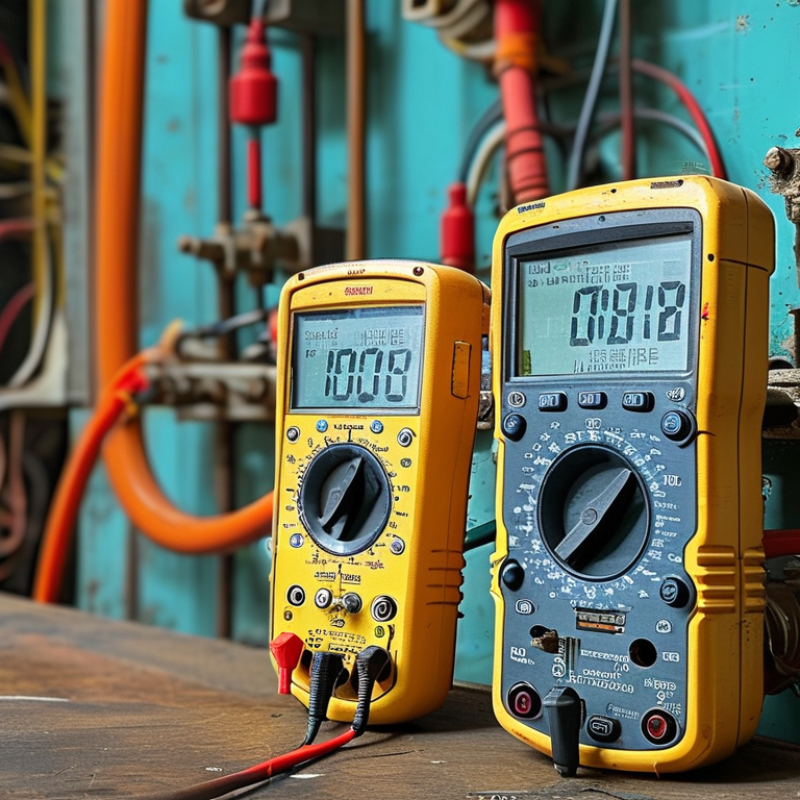
2026 Best Clamp Meter for Accurate Measurements?

What Is a Clamp Meter and How Does It Work?

A clamp meter is a handheld electrical tester that measures current without disconnecting a wire. Its hinged jaws surround a single conductor, sensing the magnetic field created by flowing electricity. This design is useful when a circuit must remain energized during inspection. Voltage, resistance, and continuity usually require test leads connected to the meter’s input ports.

For alternating current, a transformer inside the jaws detects changing magnetic fields. Direct current requires a Hall-effect sensor, which measures a steady magnetic field. Before measuring, select the correct function, inspect the leads, and check the meter’s safety rating. Open the jaws fully, place them around one conductor, and close them evenly. Two wires together can cancel their fields.

Small details affect accuracy. Centering the conductor helps, especially with low currents. Nearby energized cables may also influence the reading. I have seen unstable results after skipping the zero function on a sensitive setting. A second measurement often exposes that mistake. For starting motors, use an inrush setting if available, because normal running current may hide the brief surge. Never treat a familiar display as proof of safe conditions; verify the circuit category, insulation condition, and measurement limits in the operating instructions. Some readings still deserve doubt.

2026 Best Clamp Meter for Accurate Measurements?

What Is a Clamp Meter and How Does It Work?

This chart shows a realistic 50 Hz AC current waveform with an RMS value of 10 A and a peak value of approximately 14.14 A. A clamp meter measures current by sensing the magnetic field around a conductor, allowing measurements without disconnecting the circuit. AC clamp meters commonly use a current transformer, while models designed for DC current typically use a Hall-effect sensor.

For accurate measurements, select a clamp meter with a suitable current range, true-RMS capability for non-sinusoidal loads, and an accuracy specification appropriate for the electrical system being tested.

Key Features to Consider in a 2026 Clamp Meter

The best clamp meter for 2026 should match real measuring conditions, not just a long feature list. The IEA’s Electricity 2024 report projects global electricity demand will grow through 2026, increasing pressure on maintenance teams and field technicians. A practical meter needs true-RMS measurement for distorted loads, especially around variable-speed drives, solar inverters, and switching power supplies.

Jaw capacity matters. A 40 mm opening can handle many distribution conductors, but crowded panels may require a slimmer body. Look for a CAT III or CAT IV safety rating, verified against IEC 61010 requirements. An audible continuity test, bright backlight, and a readable display reduce mistakes in dim cabinets. Auto-ranging saves time, although manual ranging can feel more predictable during troubleshooting. That trade-off is easy to overlook.

Current resolution is equally important. A meter rated for 600 A may still perform poorly when checking a 20 mA leakage signal. Select a model with low-current accuracy, inrush capture, and a response speed suited to motor starts. The U.S. Energy Information Administration continues to report substantial industrial electricity use, where brief startup surges can reveal failing components. Data logging and Bluetooth connectivity help document intermittent faults, but wireless features are not automatically reliable. Test them before depending on them. My own preference is a rugged meter with replaceable leads, clear overload warnings, and calibration documentation. More functions are tempting. Fewer errors matter more.

How to Choose a Clamp Meter for Accurate Measurements

Choosing a clamp meter for accurate measurements starts with the work you actually perform. For household circuits, a clear display, stable readings, and suitable safety ratings may be enough. Industrial troubleshooting demands more. Look for True RMS measurement when loads contain electronic switching or distorted waveforms. A meter with both AC and DC current ranges is more versatile. Check its resolution too. A small current difference can matter during fault finding.

The jaw should close evenly around one conductor, not an entire cable. Centering the conductor usually improves accuracy. Zero the meter before measuring DC current. Keep your hands behind the protective barriers on the test leads. I have seen rushed measurements produce convincing but incorrect results. The conductor position, nearby magnetic fields, and low battery can all affect the display. Inrush-current capture is useful for motors, compressors, and power supplies. Use it only when the meter’s range and safety category match the circuit.

Accuracy claims deserve careful reading. A specification may state accuracy as a percentage plus several counts, rather than one simple number. Choose a meter with a recent calibration record when measurements support maintenance decisions or compliance checks. Test leads should be rated for the same environment as the meter. Temperature also matters, especially in cold workshops or hot panels. No meter is perfect. I still compare an unexpected reading with a second method before replacing a component. That extra check can feel slow, but it often prevents an expensive mistake.

Top Clamp Meter Types for Different Electrical Tasks

2026 Best Clamp Meter for Accurate Measurements? The right choice depends on the electrical task, not the newest feature list. The IEA Electricity 2024 report projects global electricity demand to grow by about 3.4% annually through 2026. More circuits will require practical current testing in tighter spaces.

For household panels and commercial distribution boards, an AC True RMS clamp meter handles uneven waveforms from drives, LED systems, and switched supplies. Choose a model with CAT III or CAT IV protection, depending on the installation point. A narrow jaw can reach crowded terminals. That detail matters. I have found that oversized jaws often create awkward positioning and unstable readings.

DC clamp meters suit batteries, solar arrays, and vehicle systems. Hall-effect sensors measure steady DC, while flexible Rogowski-coil meters work around large busbars and dense cable bundles. Leakage-current clamps detect small unwanted currents without disconnecting conductors. Inrush-capable meters are useful for motors and compressors, where starting current may briefly exceed normal running current by several times. NFPA research continues to identify electrical equipment as a significant source of building fire risk, so safe isolation and verified test procedures remain essential. Accuracy still depends on technique. Center the conductor, zero the meter, and avoid measuring several conductors together. I sometimes recheck a surprising result with a second method, because a clean display can still hide a poor setup.

2026 Best Clamp Meter for Accurate Measurements? - Top Clamp Meter Types for Different Electrical Tasks

Clamp Meter Type Best-Suited Electrical Tasks Typical AC Current Range Typical DC Current Range Typical Basic Accuracy Common Additional Functions Main Limitation Recommended User
AC Clamp Meter Household circuits, distribution panels, motors, heaters, and general maintenance 0–400 A or 0–600 A Usually not available About ±1.5% to ±3.0% AC voltage, resistance, continuity, frequency, diode test Cannot measure DC current through the clamp Home technicians and general electricians
AC/DC Clamp Meter Automotive systems, batteries, solar wiring, control cabinets, and industrial troubleshooting 0–400 A to 0–1,000 A 0–400 A to 0–1,000 A About ±1.5% to ±3.0% Zero adjustment, inrush measurement, min/max, temperature, capacitance DC readings may require careful zeroing and correct jaw positioning Most versatile choice for mixed electrical work
AC/DC True-RMS Clamp Meter Variable-frequency drives, switching power supplies, LED drivers, and distorted loads 0–600 A or 0–1,000 A 0–600 A or 0–1,000 A About ±1.0% to ±2.5% True-RMS voltage/current, low-pass filtering, peak or inrush capture Usually costs more and may have a higher minimum measurable current Professional electricians and industrial service technicians
Low-Current Clamp Meter Electronic circuits, standby current, control signals, and leakage-sensitive diagnosis Approximately 0.1 mA–60 A Approximately 0.1 mA–60 A About ±1.0% to ±3.0% High-resolution display, relative mode, low-pass filtering, data hold Lower maximum current capacity than general-purpose models Electronics, instrumentation, and automotive diagnostics users
Flexible Rogowski-Coil Clamp Meter Large conductors, busbars, crowded panels, and high-current three-phase systems Typically 3,000 A–6,000 A AC Generally unavailable About ±1.0% to ±3.0% Flexible probe, inrush, frequency, min/max, phase-load comparison Normally measures AC only and may be less accurate at very low currents Industrial maintenance and power-system technicians
Leakage Clamp Meter Residual-current investigation, insulation checks, nuisance tripping, and equipment leakage Approximately 0.01 mA–60 A Usually unavailable About ±1.0% to ±2.5% at low current High sensitivity, low-pass filtering, peak hold, frequency measurement Not intended for very high load-current measurements Safety inspectors and electrical fault-finding specialists
Power-Quality Clamp Meter Load studies, energy audits, phase imbalance, harmonics, and motor-performance analysis 0–600 A to 0–1,000 A 0–600 A to 0–1,000 A About ±1.0% to ±2.0% Power factor, real/apparent power, energy logging, harmonics, phase rotation More complex and typically more expensive than a standard clamp meter Energy auditors, commissioning engineers, and advanced technicians
Compact Pocket Clamp Meter Quick checks in tight spaces, service calls, and basic residential troubleshooting 0–40 A to 0–100 A Model-dependent; often unavailable About ±2.0% to ±4.0% AC/DC voltage, resistance, continuity, flashlight, auto-ranging Small jaws and lower current capacity limit heavy-duty use Apprentices, field service workers, and occasional users
Selection note: For the broadest range of electrical tasks, choose an AC/DC True-RMS clamp meter with inrush measurement, a suitable CAT safety rating, and a current range matched to the installation. Accuracy ranges are typical market specifications; always verify the individual instrument's datasheet and calibration requirements.

Safe and Reliable Clamp Meter Usage Practices

2026 Best Clamp Meter for Accurate Measurements?

Safe measurement begins before the clamp touches a conductor. The U.S. Bureau of Labor Statistics recorded 145 fatal occupational injuries involving electricity in 2022. That figure, published through the Census of Fatal Occupational Injuries, keeps routine testing in perspective. Wear voltage-rated gloves, eye protection, and flame-resistant clothing when the assessment requires them. Inspect the leads, jaw, insulation, and CAT rating before entering a live panel. Cracked insulation is not a minor defect. Do not guess.

Open the jaw only around one insulated conductor. Center the conductor, close the jaw completely, and keep fingers behind the tactile barrier. A crowded cabinet can tempt shortcuts. Resist them. Follow IEC 61010-2-032 guidance for handheld current sensors, and confirm the meter’s measurement category matches the installation.

For unknown circuits, use the highest suitable range first. Verify the instrument on a known source before testing, then repeat that check afterward. This simple habit can expose a failed fuse or damaged meter.

Accurate readings also depend on technique. Select true-RMS measurement for nonlinear loads, and use the inrush function when motors or transformers start. Low-current signals may require several turns through the jaw, with the result divided by the number of turns. Record the setup, ambient temperature, and load condition. Calibration through an ISO/IEC 17025-accredited laboratory supports traceability, but calibration alone cannot correct poor positioning. I still see readings change because the jaw was slightly open. That mistake is easy to make. It is also easy to prevent.

FAQS

What is a clamp meter used for?

It measures current without disconnecting a wire. Its hinged jaws surround one conductor. The circuit can remain energized during inspection.

How does a clamp meter measure AC and DC current?

AC models sense changing magnetic fields through an internal transformer. DC models use a Hall-effect sensor for steady magnetic fields. Different current types need different sensors.

Why must the jaws surround only one conductor?

Two conductors can cancel their magnetic fields. The display may then show a misleadingly low value. Keep the conductor centered.

How can I improve measurement accuracy?

Select the correct function and inspect the test leads. Zero the meter before sensitive readings. Nearby energized cables may disturb results.

What features matter for crowded electrical panels?

A narrow jaw fits between terminals and bundled wires. A bright backlight helps in dim cabinets. A readable display reduces rushed mistakes.

What does True RMS measurement help with?

True RMS handles distorted waveforms from drives, lighting systems, and switching supplies. Ordinary measurement methods may be less dependable there. The waveform still matters.

When is an inrush function useful?

It captures brief starting surges from motors and compressors. Normal running current may hide this short event. Recheck unexpected results.

Can one clamp meter measure every current level accurately?

Not necessarily. A 600-ampere range may perform poorly with tiny leakage current. Choose suitable low-current resolution and accuracy.

What safety details should I check before testing?

Confirm the meter’s safety category, insulation condition, and measurement limits. Use suitable leads and follow the operating instructions. Familiar readings are not proof of safety.

Are wireless logging features always reliable?

No. Wireless connections can fail near equipment or inside metal cabinets. Test the feature before relying on recorded measurements. Simple notes may sometimes work better.

Conclusion

A Clamp Meter is a practical electrical testing tool that measures current by sensing the magnetic field around a conductor, often without requiring the circuit to be disconnected. Modern models may also measure voltage, resistance, continuity, frequency, capacitance, and temperature. For accurate measurements in 2026, users should consider measurement range, accuracy, resolution, jaw size, display readability, response speed, battery life, and safety ratings. Additional features such as inrush-current detection, true-RMS capability, data hold, and automatic ranging can improve convenience and reliability in different working conditions.

Choosing the right Clamp Meter depends on the task, such as household troubleshooting, automotive testing, industrial maintenance, or high-current electrical work. Compact meters suit basic inspections, while advanced models are better for variable loads and demanding systems. Safe usage is essential: inspect the meter and test leads before use, select the correct function and range, keep fingers behind protective barriers, clamp around only the intended conductor, and follow all equipment instructions. Proper training and cautious handling help ensure dependable results and reduce the risk of electrical injury.

Aria

Aria

Aria is a dedicated marketing professional with a deep passion for innovative strategies and a keen understanding of our company's product offerings. With a wealth of experience in the industry, Aria excels at crafting engaging content that highlights the unique features and benefits of our......