China Top Digital Power Meter Suppliers?
Choosing China’s top Digital Power Meter suppliers requires more than comparing catalog prices. A reliable supplier should demonstrate measurement expertise, stable production, traceable calibration, and responsive technical support. Buyers also need to examine accuracy classes, voltage ranges, current transformer compatibility, communication protocols, and operating temperature limits. A polished website proves little.
Lord Kelvin, a pioneer in electrical measurement, said, “When you can measure what you are speaking about, and express it in numbers, you know something about it.” This principle still guides serious power monitoring today. A dependable Digital Power Meter should turn unstable readings into usable evidence. In a factory, that may mean identifying a 12% demand spike during a compressor start. In a commercial building, it may reveal nighttime consumption that monthly bills hide.
This introduction reviews leading Chinese suppliers through practical criteria, including product quality, certifications, calibration procedures, customization ability, and export experience. It also considers whether manufacturers provide clear wiring diagrams, firmware updates, sample testing, and service after delivery. These details matter when meters are installed inside crowded control cabinets.
There is no universal “best” supplier. A low-cost meter may suit basic monitoring, but it may fail in harsh environments or complex energy systems. Even this comparison has limits. Public specifications can be incomplete, and laboratory performance may differ from field results. Therefore, readers should request test reports, verify references, and evaluate samples before placing large orders. The strongest suppliers are not merely sellers. They are measurement partners with evidence behind their promises.
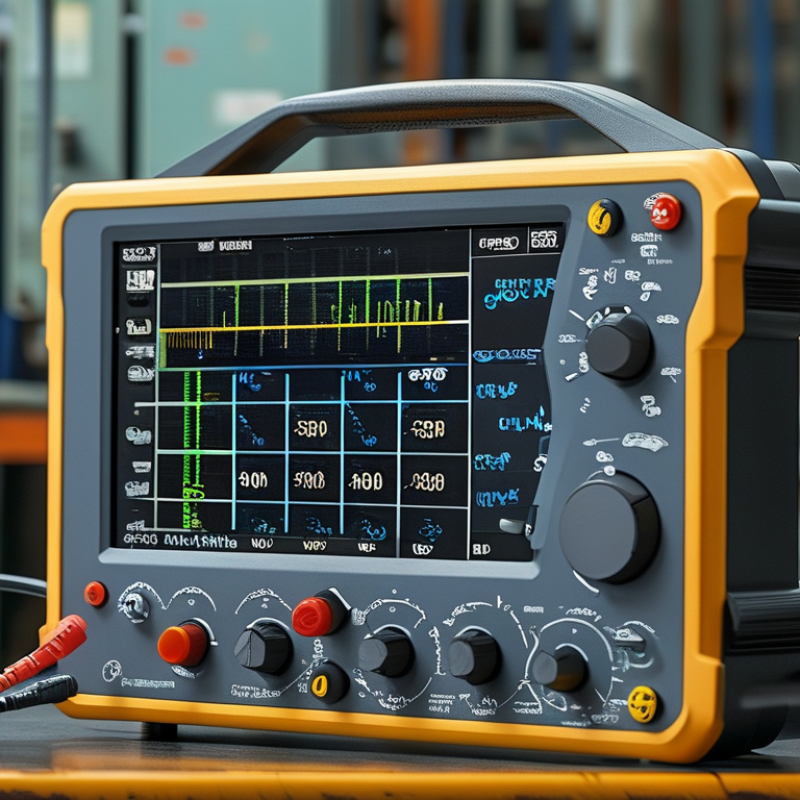
Digital Power Meter Basics: IEC 62053 Accuracy Classes from 0.2S to 2.0
IEC 62053 accuracy classes describe the maximum permissible error under defined test conditions, not a promise of perfect readings in every installation. Class 0.2S permits about ±0.2% error at specified points, while 0.5S permits about ±0.5%. These classes suit revenue measurement, substations, and industrial energy audits. The “S” designation generally indicates transformer-operated metering with stronger performance at low current levels.
Class 1.0 allows approximately ±1.0% error, and class 2.0 allows approximately ±2.0% under applicable requirements. Lower numbers mean tighter accuracy, but installation quality still matters. Current-transformer ratio, wiring resistance, phase balance, temperature, and power factor can change field results. A class 0.2S meter with poor transformer selection may perform worse than expected. That detail is often overlooked.
The IEA Electricity 2024 report forecasts global electricity demand growth of about 4% annually through 2026. More distributed generation and industrial loads will increase the need for dependable measurement. Procurement teams should compare the IEC test standard, operating range, starting current, overload capability, and verification records. A lower class is not automatically the better choice. For a small commercial panel, class 1.0 may be practical. For settlement-level measurement, class 0.2S or 0.5S is usually more defensible. I would still request independent test evidence, because catalogue accuracy can hide installation realities.
China Top Digital Power Meter Suppliers? - Digital Power Meter Basics: IEC 62053 Accuracy Classes from 0.2S to 2.0
| Accuracy Class | Relevant IEC 62053 Series | Indicative Maximum Permissible Error at Reference Conditions | Typical Meter Application | Recommended Evaluation Points |
|---|---|---|---|---|
| 0.2S | IEC 62053-22, active energy, transformer-operated static meters | Approximately ±0.2% | High-accuracy commercial or industrial energy measurement, substation measurement, and revenue-grade installations where the applicable utility rules permit this class | Current-transformer compatibility, test points, power-factor performance, terminal configuration, sealing provisions, and calibration documentation |
| 0.5S | IEC 62053-22, active energy, transformer-operated static meters | Approximately ±0.5% | Industrial energy monitoring, feeder measurement, commercial facilities, and many transformer-connected metering systems | Specified current range, CT ratio programming, communication accuracy, auxiliary supply stability, and performance over the intended load profile |
| 1.0 | IEC 62053-21, active energy, static meters | Approximately ±1.0% | General-purpose commercial, industrial, building-management, and distribution-panel metering | Direct or CT-connected input, nominal voltage and frequency, display readability, pulse output, RS-485 or other communication options, and installation category |
| 2.0 | IEC 62053-21, active energy, static meters | Approximately ±2.0% | Basic energy indication, non-revenue facility monitoring, auxiliary distribution, and applications where moderate measurement accuracy is acceptable | Cost, rated current, overload capability, enclosure and mounting method, environmental conditions, and required data outputs |
- The values above are nominal accuracy-class limits expressed as a percentage under specified reference conditions; they are not a blanket error limit for every operating condition.
- The “S” designation is used for transformer-operated active-energy meters covered by IEC 62053-22 and indicates a class tested under the conditions defined by that standard.
- IEC 62053-21 covers class 1 and class 2 static active-energy meters, while IEC 62053-22 covers higher-accuracy transformer-operated classes such as 0.2S and 0.5S.
- Before purchasing, verify the complete datasheet, current range, voltage rating, frequency, power-factor test points, CT or VT requirements, communication protocol, environmental rating, and local approval requirements.
FAQS
: Request the exact standard number, test report, model number, and report date. Avoid broad certification claims. Each document should match the same rated voltage, frequency, and firmware version.
No. IEC compliance should match the meter’s functions, accuracy class, safety design, and communication interfaces. Ask for supporting test details. A general statement is not enough.
MID approval matters for regulated energy measurement in applicable European markets. Confirm whether your installation requires it. Local rules may differ.
CE marking generally reflects the manufacturer’s conformity declaration. It is not one universal certificate. Review the supporting technical documents carefully.
No. ISO 9001 supports quality management systems, not measurement accuracy itself. Request calibration records and recent batch inspection results. Quality systems help, but they do not replace testing.
Check the model, voltage, frequency, firmware, laboratory accreditation, and report date. A certificate may belong to an older model. That is a warning sign.
A 5(60)A meter suits smaller circuits and controlled household loads. A 10(100)A meter offers more capacity for workshops and larger buildings. Check starting currents, cable size, ventilation, and terminal temperature limits. Do not choose by maximum amperage alone.
Repeated operation near the maximum current can increase heat. A higher-capacity meter provides more headroom. Poor ventilation can still create problems. I have seen buyers miss this detail.
Look for at least twelve months, with the starting date clearly defined. Confirm coverage for display failure, inaccurate readings, relay damage, and manufacturing defects. Ask about replacement parts, return freight, response times, and calibration support. A long warranty sounds useful. Vague coverage is weak protection.
Conclusion
Choosing the right Digital Power Meter requires more than comparing prices. This guide explains IEC 62053 accuracy classes, ranging from 0.2S for high-precision applications to 2.0 for basic monitoring needs. It also outlines how to evaluate Chinese suppliers by checking measurement accuracy, sampling rates, communication functions such as Modbus, and support for single-phase, three-phase, and smart metering systems. Understanding these technical factors helps buyers match a meter with industrial, commercial, or residential requirements.
The article also presents a practical certification checklist covering IEC standards, MID approval where applicable, CE marking, ISO 9001 quality management, and China CCC compliance. Buyers can compare common current ranges, including 5(60)A and 10(100)A, while reviewing warranty length, technical support, calibration services, and product consistency. By assessing specifications, certifications, durability, and after-sales terms together, purchasers can select a reliable meter that delivers accurate readings and long-term value.
